
Speed, agility, and coordination are core physical abilities used across many sports. These abilities influence how an athlete moves, reacts, changes direction, and controls body position. Training these skills requires structured practice, repetition, and recovery. They are not fixed traits and can be developed through planned methods.
This article explains techniques to improve speed, agility, and coordination through movement drills, strength support, nervous system training, and practice structure.
Understanding Speed Agility And Coordination
Speed refers to how fast the body or body parts move in a given direction.
Agility refers to the ability to change direction while maintaining control.
Coordination refers to the ability to control movement patterns efficiently.
These abilities work together. Improving one often supports the others.
Role Of The Nervous System
Movement begins in the nervous system. Signals travel from the brain to muscles to produce action. Training speed, agility, and coordination improves how quickly and accurately these signals are sent and received.
Practice improves:
- Reaction timing
- Movement sequencing
- Muscle activation order
Consistent training strengthens these patterns.
Principles Of Speed And Agility Training
Movement Quality
Movement quality matters more than repetition count. Each drill should be performed with control.
Progressive Difficulty
Drills should progress gradually. Complexity increases as coordination improves.
Recovery Balance
Speed and agility training require rest between efforts. Fatigue reduces movement accuracy.
Techniques To Improve Speed
Speed training focuses on short bursts of movement.
Sprint Training
Short sprints train acceleration and stride control.
Key points include:
- Proper posture
- Arm movement coordination
- Controlled foot contact
Sprints should be short with rest between repetitions.
Resistance Sprinting
Resistance such as sleds or bands adds load to sprinting.
Resistance improves force production during movement.
Resistance should be light to avoid form breakdown.
Start Drills
Start drills train reaction and acceleration.
Examples include:
- Standing starts
- Kneeling starts
- Visual or sound cues
Start drills improve response time.
Techniques To Improve Agility
Agility training focuses on direction change and control.
Change Of Direction Drills
These drills involve planned movement patterns.
Examples include:
- Shuttle runs
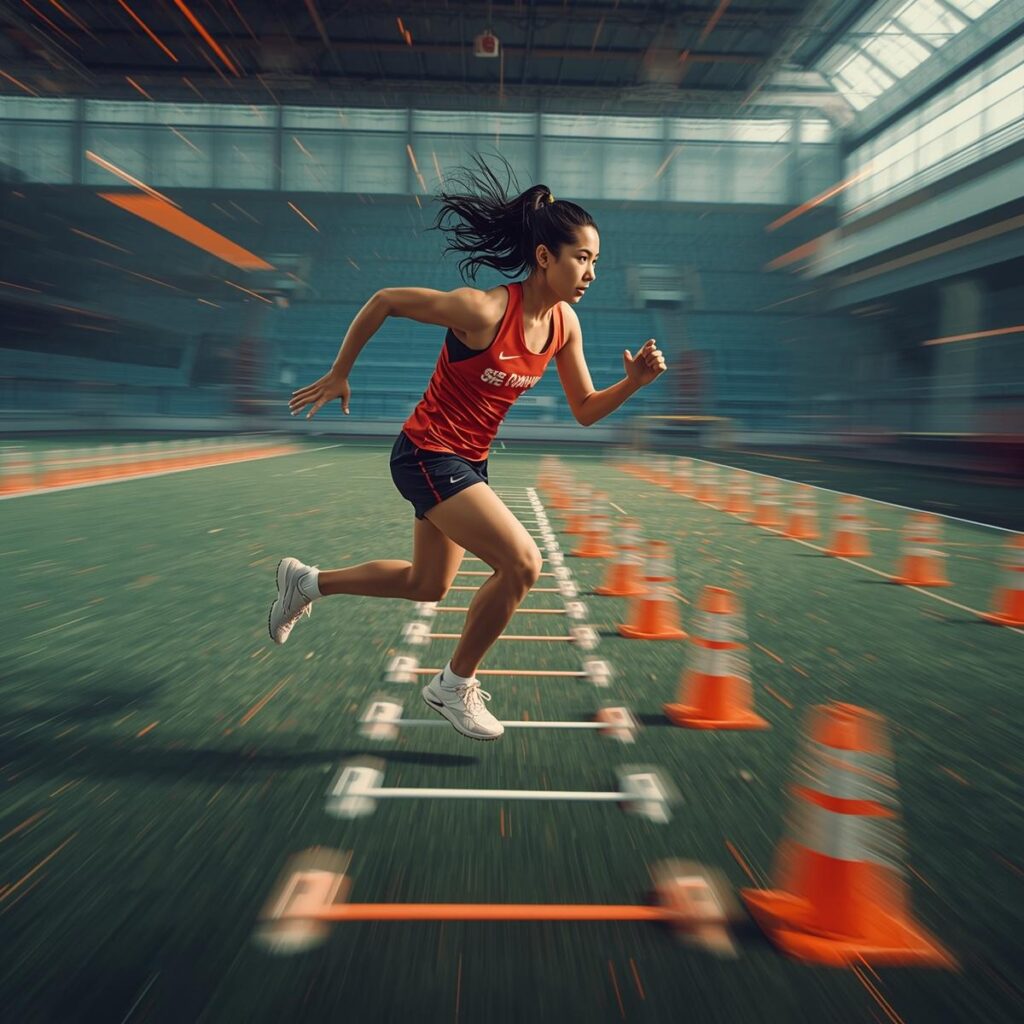
- Cone drills
- Line drills
These drills train deceleration and reacceleration.
Reactive Agility Drills
Reactive drills involve responding to cues.
Examples include:
- Partner signals
- Light signals
- Ball movement
Reactive drills improve decision making during movement.
Techniques To Improve Coordination
Coordination training focuses on movement control.
Footwork Drills
Footwork drills train timing and placement.
Examples include:
- Ladder drills
- Line stepping patterns
Footwork improves rhythm and balance.
Hand Eye Coordination Drills
These drills improve timing between vision and movement.
Examples include:
- Ball catching
- Ball tapping
- Target throws
These drills support sport specific skills.
Multi Limb Drills
Multi limb drills involve arms and legs together.
Examples include:
- Crawling patterns
- Alternating movements
These drills support body awareness.
Strength Training Support
Strength supports speed and agility by improving force output.
Key strength movements include:
- Squat patterns
- Hinge patterns
- Push patterns
- Pull patterns
Strength training should support movement rather than replace speed work.
Plyometric Training
Plyometrics train rapid force production.
Examples include:
- Jump patterns
- Hop patterns
Plyometrics improve muscle response speed.
Volume should be limited to maintain movement control.
Balance Training
Balance supports coordination and agility.
Balance drills include:
- Single leg stance
- Controlled reaches
Balance training improves body awareness.
Warm Up For Speed And Agility Training
Warm up prepares muscles and joints.
Warm up includes:
- Light movement
- Joint motion
- Gradual speed increase
Warm up reduces injury risk.
Training Frequency
Speed and agility training should be performed two to four times per week.
Sessions should be short and focused.
Excessive frequency reduces quality.
Rest And Recovery
Rest supports nervous system recovery.
Rest includes:
- Breaks between sets
- Recovery days
- Sleep
Recovery maintains movement accuracy.
Monitoring Progress
Progress tracking supports improvement.
Tracking methods include:
- Sprint timing
- Drill completion time
- Movement control notes
Tracking guides adjustments.
Common Errors In Speed And Agility Training
Errors include:
- Excessive fatigue
- Poor movement control
- Skipping warm up
Correcting errors improves outcomes.
Speed And Agility For Different Sports
Each sport emphasizes different patterns.
Field sports focus on direction change.
Court sports focus on reaction.
Track sports focus on straight speed.
Training should match sport demands.
Speed Training For Different Experience Levels
Beginners
Beginners focus on:
- Basic movement
- Low volume
- Technique awareness
Intermediate Participants
Intermediate participants focus on:
- Structured drills
- Planned progression
Advanced Participants
Advanced participants focus on:
- Reactive drills
- Load management
Experience guides complexity.
Mental Focus During Speed Training
Mental focus supports movement timing.
Focus includes:
- Cue awareness
- Movement intent
Mental engagement improves response.
Integrating Speed Training Into Programs
Speed and agility work should occur early in sessions.
Fatigue reduces effectiveness.
Short focused blocks support results.
Injury Prevention In Speed Training
Prevention depends on:
- Warm up
- Progressive loading
- Recovery planning
Awareness supports long term participation.
Long Term Development
Speed, agility, and coordination develop over time.
Consistency matters more than intensity.
Small improvements accumulate.
Final Thoughts
Techniques to improve speed, agility, and coordination rely on structured drills, nervous system training, strength support, and recovery planning. These abilities respond to consistent practice and controlled progression. By focusing on movement quality, reaction training, and balance, athletes can improve how they move, respond, and perform in sport over time.